
Dog ID Tags India: How to Pick One That Actually Brings Your Dog Home
If one thing is right, a dog that goes missing in a crowded Indian neighbourhood has a better chance of coming back home: the collar tag. Not the most attractive tag! Not the most expensive one – The right one. The one that a curious child in a housing society can read from a distance and won't get lost on a monsoon afternoon hanging on a gate, and has enough information for a stranger to reach your dog in 2 minutes.
Whereas in India, dog ID tags have changed a lot from the basic engraved ones that are sold at markets/pet stores. Dog identification tags are now available to order online and from specialist pet suppliers in a variety of personalised styles, as well as QR-linked tags, weatherproof stainless steel and silicone alternatives. It's not as easy as it should be for dog owners to find the answer to what works best given the diverse array.
This book cuts through all that and provides you with a practical approach to selecting a tag that performs one task.
Unfortunately, most dog owners make the mistake of this very thing the first time. Unfortunately, most dog owners do this the first time they own a dog.
The most frequent error is making it look good instead of it working. Tidy tags on collars in product pictures may not last for six months when the products are used by active dogs every day. Printed silicone tags tend to fade. Aluminium tags are easily corroded and are therefore cheap. Tags are difficult to read with decorative holes or cut-outs as they get old and create a problem with the structure.
The other most frequent error was too little data on the tag, or the wrong data. It's better than nothing to have a dog name and one phone number engraved on a tag. But a number that isn't answered, a second call that isn't included, or a city code that isn't even in the number creates a situation where a kind stranger is left by the wayside.
The first thing to consider when selecting a dog ID tag in India should not be the type of tag, but what is going to happen when a dog is lost. Simply walk through this scenario without picking anything.
What Survives Indian Conditions is a book that examines the nature of art in India and what it means to remain relevant in conditions like these.
In the Indian climate, collar accessories don't get treated well. A tag goes through many changes throughout its life, caused by humidity, monsoon water, dust, and heat, plus an occasional tug of war in the park.
Stainless steel proves to be the longest-lasting and most readable of materials with the passage of time. It has high corrosion resistance, shape stability, and can not fade the text engraved or laser-etched. For dogs who swim, play in wet areas, or live in coastal or high-humidity areas, stainless steel is best. The tag will not shine until it's no longer needed but will still be readable for many years.
It is also an option that is secondary durable, with the benefit of a very attractive finish that many owners appreciate. Does tarnish with time, and in extremely humid environments it may regain a patina, but engraved text will usually be readable. If your dog is not as active or spends more time indoors, then brass is a good option.
Aluminium is readily available, inexpensive, and light in weight, and is ideal for small breeds. One drawback is that it is not as durable as other types of materials when it comes to physical stress and corrosion in wet environments. An aluminium personalised dog ID tag is a good choice for a small dog that stays inside most of the time, but it's not an ideal choice for a Labrador, Golden Retriever or any dog that goes outside and around much.
For dogs that are sensitive to the sound of metal tags, silicone tags are quiet, lightweight, and comfortable. The limiting factor for the function is longevity. Printed words fade on silicone, particularly when exposed to water frequently. Silicone lasts for 12-18 months no matter how much wear it shows if you opt for silicone.
The topic of what to engrave and what not to engrave is quite a tricky one!
The tag should have three questions answered for the finder: Whose dog is this, how to reach the owner, and are there any immediate concerns I should have about this dog.
The name of the dog is given first. It aids the finder to establish a bond with the animal, which will make it more likely for them to remain with the dog and bother to get a hold of you instead of moving on.
The most critical piece of information is your phone number. If space permits, use the complete 10 digit number and country code. The country code is important if your dog travels with you between cities or if you believe someone may be able to locate you, but not have an Indian number programmed into their device.
The odds of reuniting go up by a factor of 2 with a second contact number. If a finder so dials the main number and fails to get an answer, he/she is not allowed to dial again. A second number for a family member, partner or trusted friend is safety in case of emergency, and greatly enhances the chances of survival.
If space permits, an address or neighbourhood should be included. If the finder cannot contact you right away, it helps if the name of the dog's colony or the name of the housing society is understood as a locality name in Indian cities, as this would inform the finder where he or she should take the dog.
The one thing that you should exclude is the breed of the dog. It uses up precious real estate and provides no information that aids in returning the dog. A picture in a QR profile is much more effective in doing this.
The following are good reasons to consider using a QR Dog ID Tag:
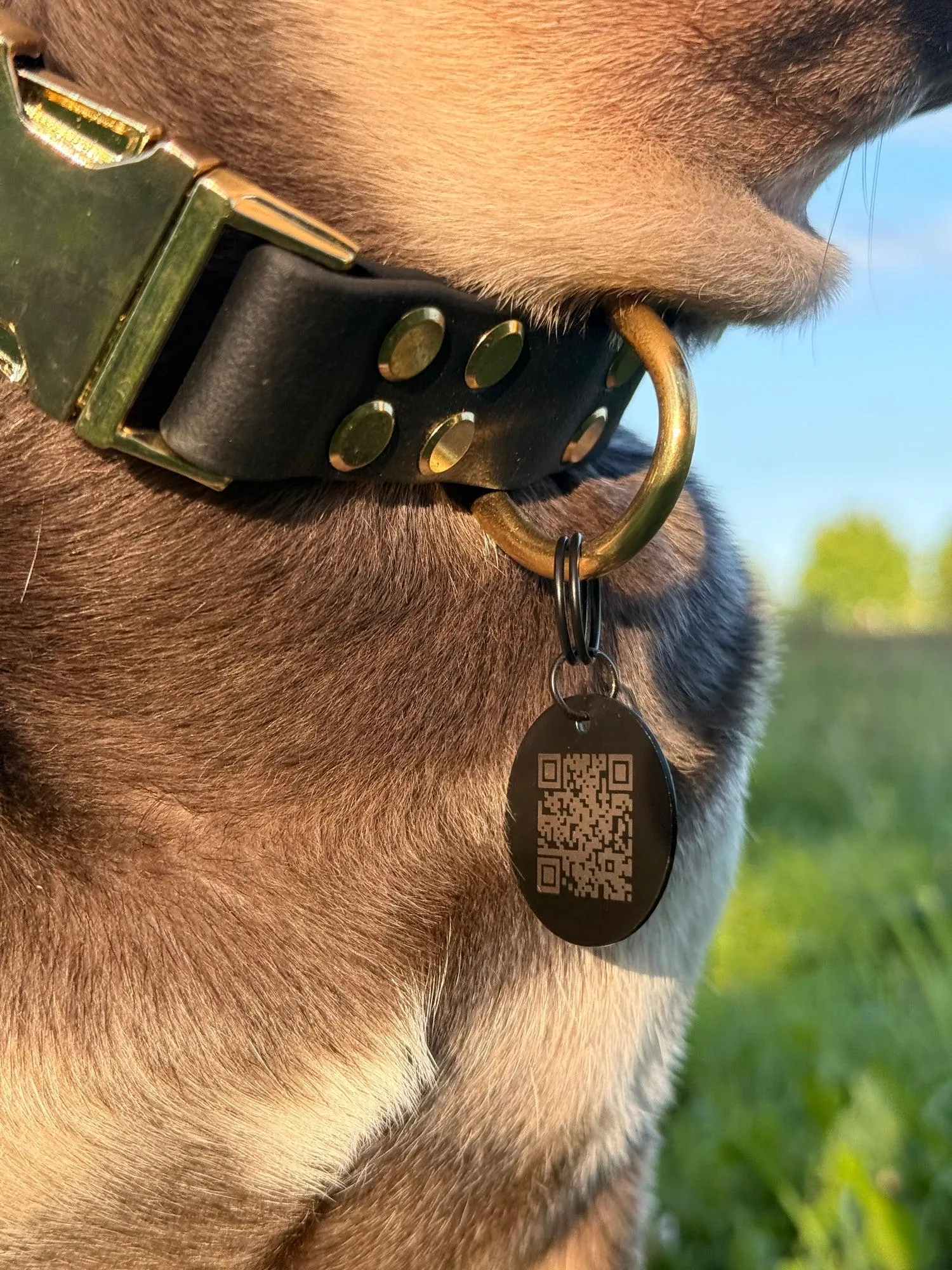
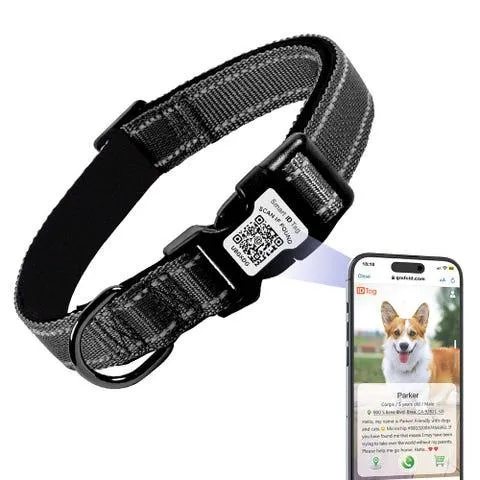
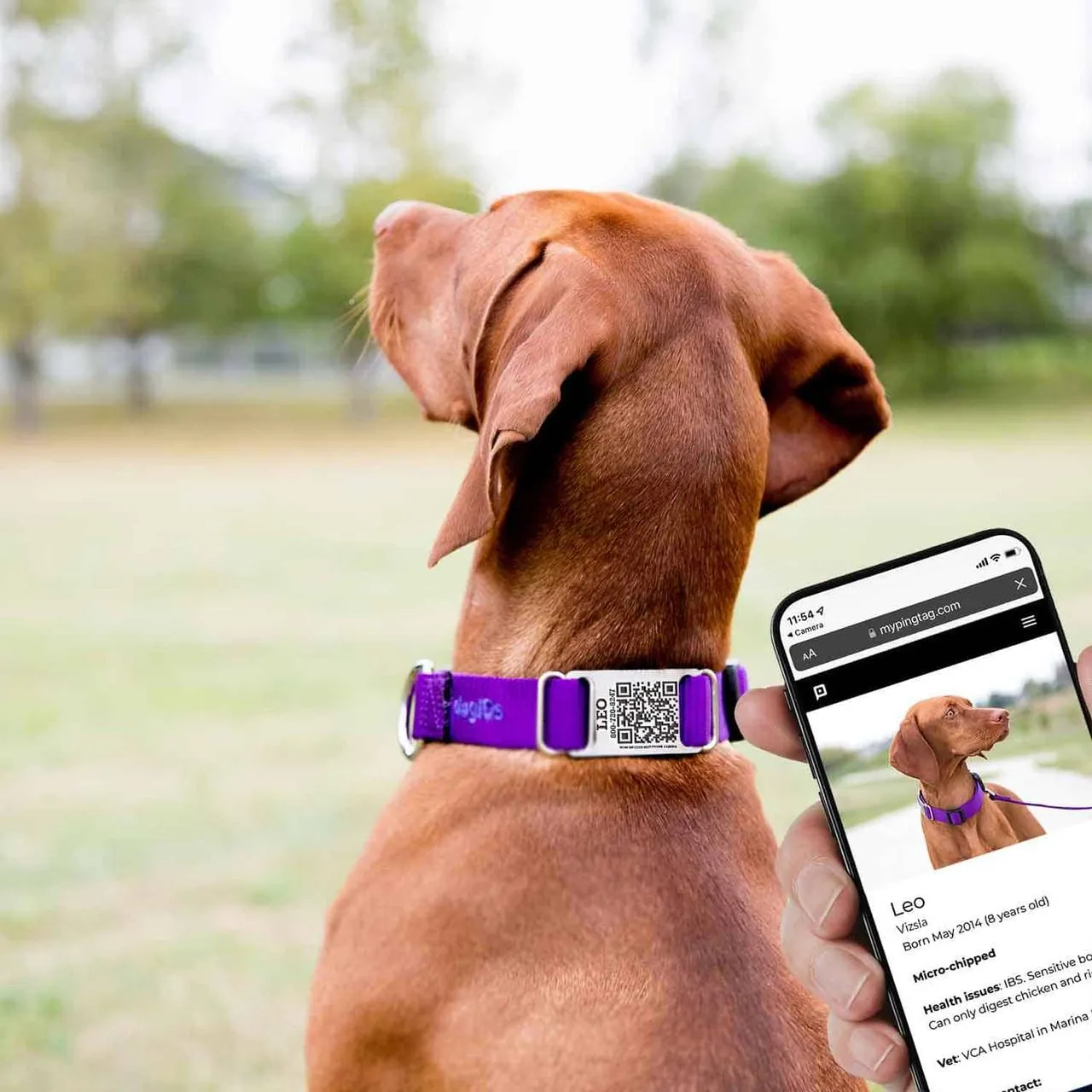
The QR dog ID tag is able to do something engraving tags can't: update the information on the tag without replacing or removing the tag. If your cellphone number changes, you update the profile you have linked to it. The address is updated when you change cities. The actual situation of your dog is always up to date on the physical tag on his collar.
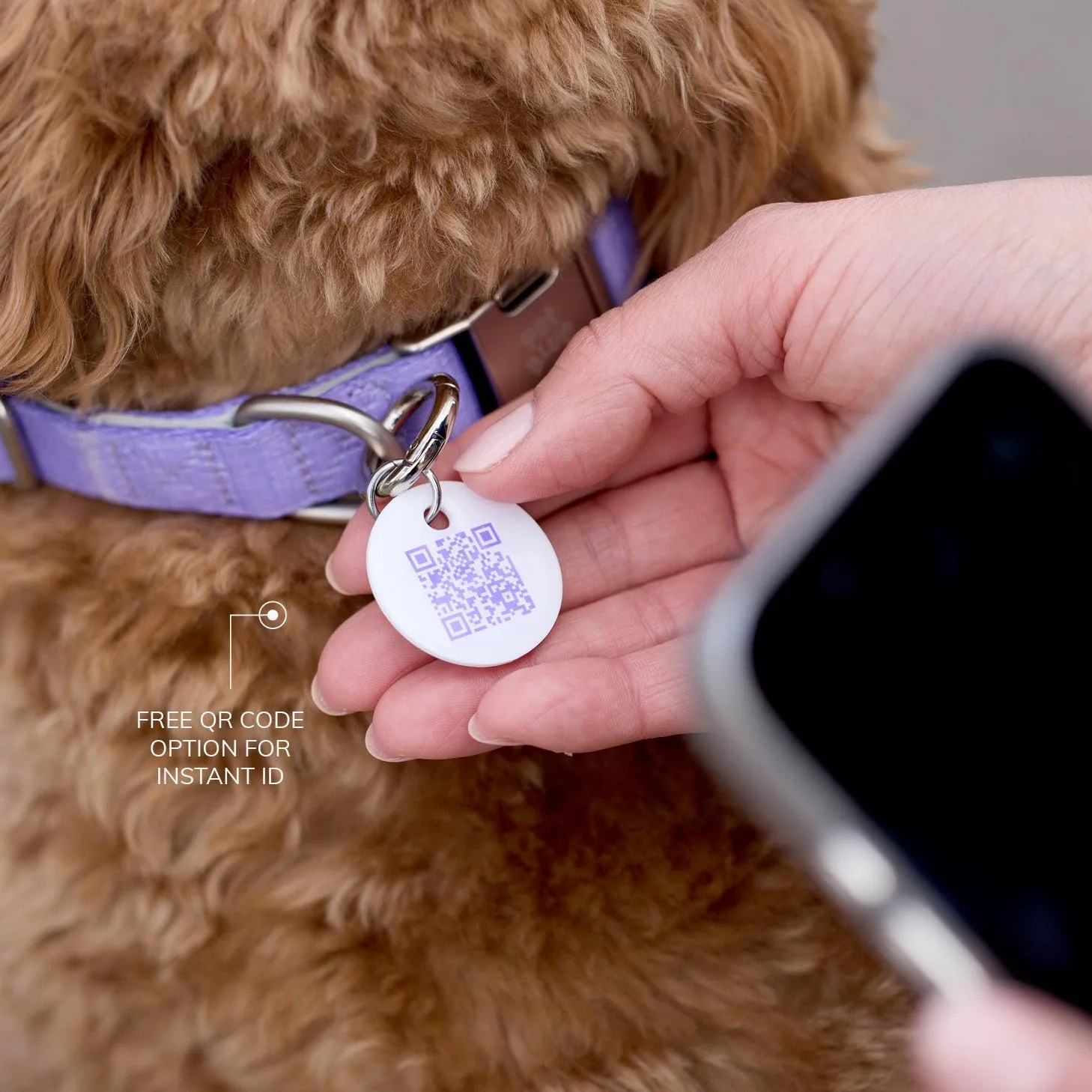
There is a high level of awareness regarding QR codes in India. A QR code can be scanned by any smartphone camera from the last five years without the need for any additional app, and UPI has made scanning a quasi-hack of the QR code. A finder in Mumbai, Bangalore or Lucknow will have no hesitation and have the ability to scan a QR tag on a dog without any unnecessary hassle.
A good suggestion for most Indian dog owners is to use a primary tag (s stainless steel engraving with base contact information) and a secondary tag (QR tag/sticker) as well. The engraved tag is an independent tag that doesn't require a phone or internet connection. The QR tag has a depth ability, multiple contact options, a dog photo, and veterinary information that can't be engraved.
Star Tag is a perfect blend of the above for Indian pet owners, knowing that solutions suited to markets that inspired most of the world's pet ID products are not applicable in Indian neighbourhoods.
The questions that really matter, and the answers that are relevant to the size and attachment of students.
It's better to have no tag than a tag that is lost, as it can give the impression of security. It's a design detail that many purchasers don't factor in when they are making a purchase.
The spiral metal rings used on most tags, called split rings, work well, but may open with repeated tugging or snagging. A good quality jump ring or a welded ring is more secure and should be sought on higher quality tags. Checking a tag monthly only takes 30 seconds and will help prevent the loss of the tag and is essential for dogs who are known to pull, or for active breeds.
The tags should be the proper size for the size of the dog. A tag is a problem on a small dog, as it will make noise and cause discomfort. If the information you want to include is too much for a small tag on a large dog, consider using a larger tag. If you would like to include more information, then you might need to use a larger tag on a large dog. The majority of manufacturers will offer a weight range or a recommended breed size. After that it is not just about looks; it's about practicality.
Many people don't realize how important it is to put the tag on the collar. A tag on the buckle section of the collar is more likely to remain attached than a tag hanging free at the front, which swings around and can catch on things when playing.
Conclusion
The simplest, most effective measure for keeping your dog safe is a dog ID tag, and once it's on your dog's collar, it's maintenance-free. It's not just about it being durable to Indian weather; it's also necessary to be able to carry the right information, and it needs to be readable by someone who is not familiar with you and can read it within about 10 seconds.
Every dog owner in India should have the basics, which include stainless steel or brass, with your dog's name and at least 2 phone numbers. This is where a QR tag comes in handy as an additional recovery tool in addition to engraving, and it's connected to an updatable profile that includes a picture and a veterinarian's contact.
To overcome these and other limitations, Star Tag has developed dog ID tags for Indian conditions and the practical issues with how lost dogs are recovered in Indian cities. The next step is just putting the correct tag on your dog's collar prior to use.