
Which Dog ID Tags in India Actually Survive Daily Wear and Weather
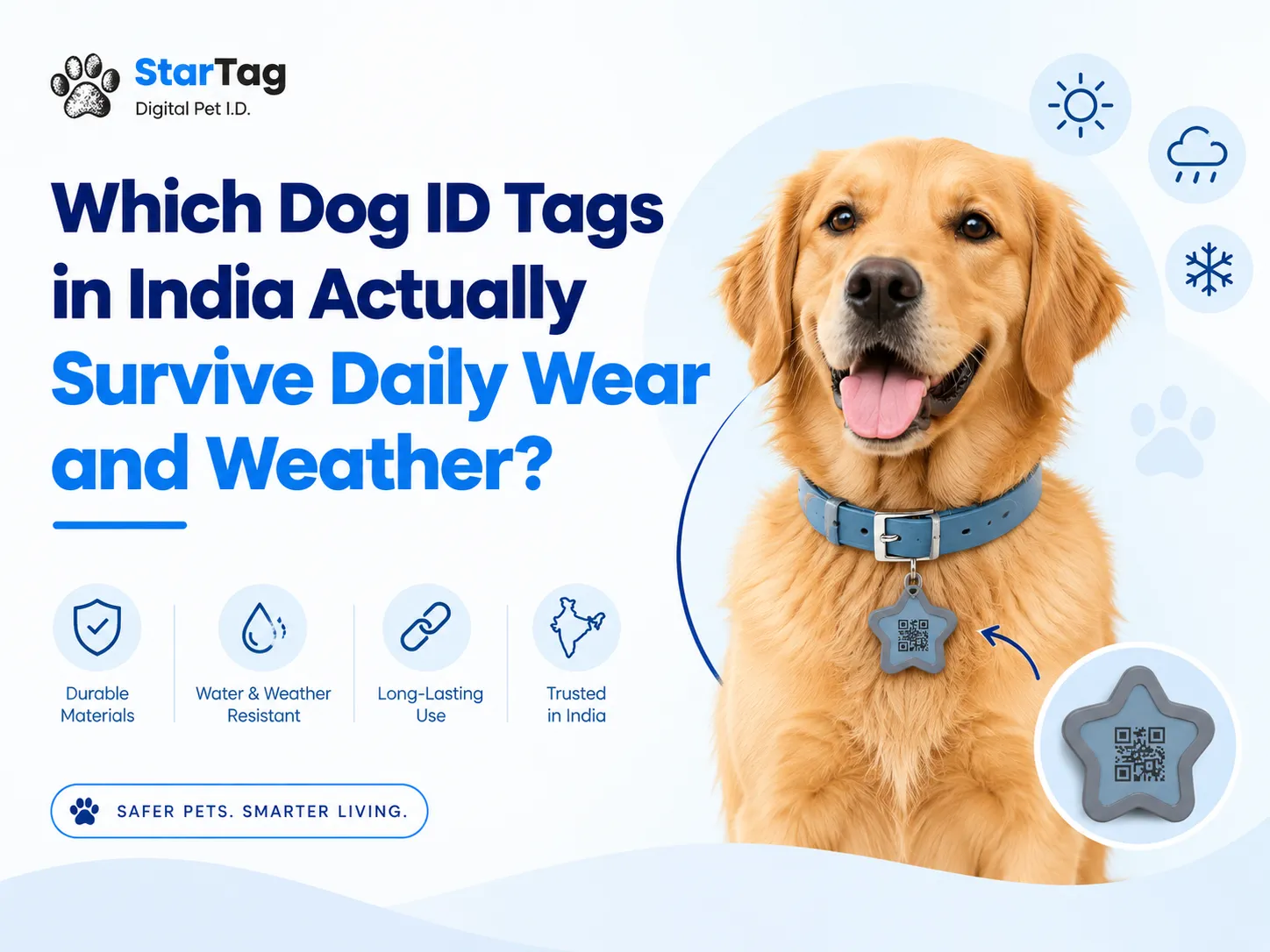
Open any pet owner's drawer of "old collar stuff," and you'll usually find at least one dog ID tag that failed quietly: text worn smooth, a corroded edge, or a clip that snapped somewhere along the way. Nobody notices the failure happening in real time. It's gradual, invisible, until the day it actually matters and the tag can't do its one job. Most owners assume a tag failed because it was cheap. Often, that's not quite right. It failed because it was never actually tested against what Indian weather and daily wear put it through. This article looks at the common assumptions that lead owners toward tags that don't last, and what genuinely determines whether dog ID tags India owners buy make it through a full year of monsoon, heat, and everyday wear. A lot of buyers assume any metal tag is inherently durable, treating material choice as a solved problem the moment they avoid plastic. This assumption misses something important: not all metals behave the same way under humidity and heat, and the difference shows up faster than most people expect. Brass, for instance, looks premium on day one but tarnishes and dulls noticeably within a single monsoon season in high-humidity regions. Lower-grade stainless steel blends can also corrode faster than owners assume, since "stainless steel" as a label covers a range of actual grades, not one uniform standard. The real question isn't metal versus non-metal; it's which specific material and grade genuinely resists corrosion under repeated humidity exposure. This assumption misses a slower, sneakier failure mode. Printed or painted text can remain technically visible while becoming progressively harder to read under direct sunlight glare or low light, exactly the conditions someone finding a lost dog is often working in. UV exposure doesn't just fade text to invisibility overnight; it gradually reduces contrast and clarity long before the tag looks obviously "worn out" to a casual glance. Genuinely engraved text, physically cut into the surface rather than layered on top of it, avoids this gradual legibility decline almost entirely. This is one of the most overlooked factors buyers skip when evaluating a personalised dog ID tag, focusing instead on font style or design rather than how that text is actually applied to the material. Weight and thickness matter, but they're often confused with each other. A thick tag made from a lower-quality material can still warp or bend under repeated pressure, while a properly finished, moderately thick tag in a genuinely corrosion-resistant material holds its shape far longer. Sturdiness comes from material quality and construction, not simply how heavy the tag feels in your hand. This matters practically because overly heavy tags can also become uncomfortable for smaller dogs, adding unnecessary bulk without meaningfully improving durability if the underlying material choice is weak. Ask most owners what part of an ID tag fails first, and they'll guess the tag face itself. In practice, the attachment ring or clip often fails before the tag does. A corroded or weak ring can snap during normal activity, a walk through bushes, a rough play session, a swim, and the tag is simply gone, regardless of how durable the tag itself was. This is why evaluating a tag purely on its face material and engraving misses half the picture. The ring needs to match the same durability standard as the tag itself, ideally the same corrosion-resistant material, not a cheaper component that corrodes faster and becomes the actual point of failure. Durability solves one problem, but it quietly creates another that most buyers don't think about until they're already stuck with it. Once text is engraved or printed onto a metal tag, it's fixed. If you change your phone number, move to a new address, or want to add a second emergency contact, the tag itself can't be updated. Your only real option is ordering a brand-new tag and replacing the old one entirely. This isn't a rare edge case. Phone numbers change, families relocate, and many owners want the flexibility to list a second contact, like a family member or neighbour, in case the primary number isn't reachable when it matters most. A tag that can't adapt to any of this means your dog could end up wearing outdated contact information without anyone realising it, right up until someone actually tries to call the number engraved on it. This is the practical limit of even a perfectly durable, well-engraved metal tag. It can survive monsoon, heat, and years of wear, and still fail at its actual job the moment the information on it goes out of date. Rather than relying on assumptions, evaluate any tag against specifics: Ask for the exact material grade, not just a general label like "stainless steel," since grade quality genuinely varies between suppliers. Confirm the text is engraved, not printed or painted, especially for tags that will see regular outdoor sun exposure. Check the attachment ring's material and thickness separately from the tag itself, since this is a common, overlooked failure point. Consider your dog's specific lifestyle, since a dog that swims regularly or spends most of its day outdoors needs a higher durability standard than a primarily indoor companion. Look for finish quality on edges, since rough or poorly finished edges wear faster and can snag on collars or foliage during regular activity. Assuming any metal tag is durable enough, without checking actual grade or corrosion resistance specifics. Choosing printed text for cost savings, then losing legibility well before the tag physically fails. Judging durability by weight or thickness alone, rather than material quality and construction. Overlooking the attachment ring entirely when evaluating a tag's overall durability. Assuming contact details won't change, then being stuck with outdated information engraved permanently on the tag. Most tag failures aren't really about bad luck or an inherently "cheap" product; they're the predictable result of a few common assumptions that skip over the specific details that actually determine durability. Confirming real material grade, genuine engraving over printing, a matching-quality attachment ring, and proper edge finishing gives a far clearer picture than judging a tag by appearance or weight alone. And durability aside, it's worth remembering that a purely physical tag can never update itself when your contact details do. If you'd rather skip the guesswork entirely, Startag builds personalised dog ID tags specifically tested against India's climate and everyday wear, so durability isn't left to assumption. Startag also solves the permanence problem directly: each tag links to a digital profile you can edit any time, so if your number changes or you want to add a second contact, you update it online instead of ordering a replacement tag. That same profile can also hold your dog's vaccination records, so anyone who scans the tag, whether it's a neighbour, a vet, or a stranger who finds your dog, gets access to accurate, current information exactly when it's needed.The Assumption That Costs Owners the Most: "Metal Is Metal"
Myth: "If the Text Is Still There, the Tag Is Fine"

Myth: "A Bigger, Heavier Tag Is Automatically Sturdier"
The Overlooked Failure Point: The Ring, Not the Tag

The Other Problem With Metal Tags: They're Permanent, and Life Isn't

Building a Realistic Durability Checklist
Common Mistakes That Come From These Assumptions

Bringing It Together